
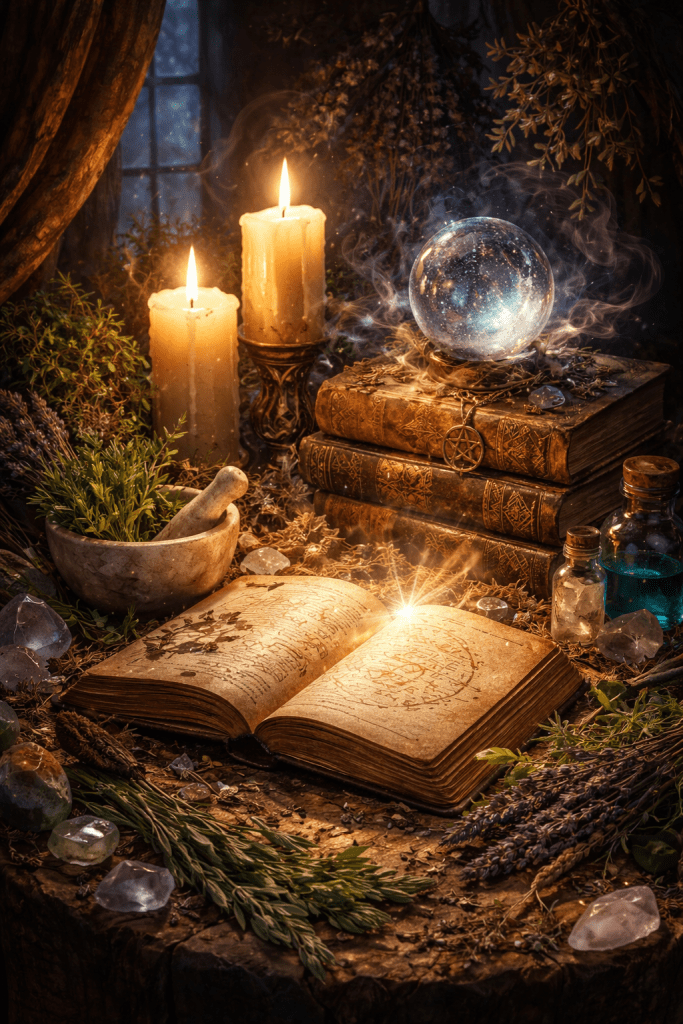
White magic is one of the oldest cultural concepts known to humanity. It emerged from early human attempts to understand nature, heal illness, protect communities, and explain the unknown. In historical and mythological traditions, white magic refers to practices believed to serve positive purposes such as healing, protection, spiritual balance, and attracting good fortune.
This article presents white magic strictly from a cultural, historical, and mythological perspective, not as a scientifically proven or practiced belief.
The History of White Magic Through the Ages
Early Origins (Prehistoric Era)
Anthropological research suggests that the origins of white magic date back to prehistoric societies. Shamans and spiritual healers performed rituals, dances, and symbolic acts while using herbs and natural elements. These practices were believed to protect tribes, cure diseases, and maintain harmony between humans and nature.
White Magic in Ancient Egyptian Civilization
In ancient Egypt, magic was an essential part of daily life and was known as Heka, a sacred cosmic force believed to be granted by the gods. White magic was commonly used for healing, protection, and preserving cosmic order. Priests wrote spells on papyrus scrolls and crafted amulets to guard against illness and misfortune.
Common tools and practices:
- Protective amulets such as the Eye of Horus and scarabs
- Papyrus scrolls containing spells
- Medicinal herbs and sacred oils
- Symbolic rituals and spoken incantations
Notable figure:
Imhotep, a physician, architect, and priest later revered as a god of healing.
White Magic in Ancient Greek and Roman Cultures
In ancient Greece, white magic was closely linked to philosophy, medicine, and natural science. It was considered a form of hidden knowledge based on understanding herbs, celestial movements, and natural forces.
The Romans adopted many Greek concepts and legally distinguished between beneficial magic and harmful magic, allowing healing practices while prohibiting destructive ones.
Common tools and practices:
- Herbal remedies
- Incense and purification rituals
- Astronomical and planetary symbols
- Spoken charms and prayers
Notable figures and myths:
- Circe, a mythological sorceress skilled in herbal magic
- Asclepius, the god of healing and medicine
- Apollonius of Tyana, a philosopher associated with spiritual wisdom
White Magic in Eastern Civilizations (India and China)
In India, white magic traditions were associated with mantras, meditation, and the concept of prana, the life-force energy. These practices aimed to achieve harmony between the body, mind, and spirit.
In China, Taoist philosophy emphasized balance between Yin and Yang, viewing spiritual rituals as methods for maintaining natural equilibrium.
Common tools and practices:
- Meditation and chanting
- Energy symbols and talismans
- Spiritual exercises
- Herbal knowledge
Associated figures:
- Vedic sages of ancient India
- Laozi, founder of Taoist philosophy
White Magic in Medieval Europe
During the Middle Ages, the concept of white magic became more clearly defined to separate benevolent practices from black magic. Often referred to as natural magic, it relied on the study of plants, stones, and astrology. Despite its peaceful intentions, many practitioners were persecuted due to religious misunderstandings.
Common tools and practices:
- Herbal manuscripts
- Candles and ritual objects
- Gemstones
- Astrological charts
Famous mythological figures:
- Merlin, the legendary wizard and advisor to King Arthur
- Folk healers and herbalists across European villages
Myths and Legends of White Magic
White magic appears prominently in global mythology. The legend of Merlin portrays magic as wisdom used to guide rulers and protect kingdoms. European folklore also describes nature healers who lived in forests and used herbs to aid communities.
Some legends speak of a Book of Wisdom, believed to grant knowledge rather than power to those with pure intentions, symbolizing ethical responsibility in the pursuit of knowledge.
White Magic in Modern Cultural Interpretation
In modern times, white magic is often viewed symbolically rather than literally. Practices such as meditation, positive affirmations, and ritual symbolism are commonly interpreted as psychological or spiritual techniques that promote relaxation and mental well-being rather than supernatural abilities.
Disclaimer
This article is provided for cultural, historical, and educational purposes only. It does not promote, endorse, or encourage the practice or belief in magic in any form.
Sources and References
- Encyclopaedia Britannica – Magic
https://www.britannica.com/topic/magic-supernatural-phenomenon - Wikipedia – White Magic
https://en.wikipedia.org/wiki/White_magic - History – History of Witchcraft
https://www.history.com/topics/folklore/history-of-witchcraft
 wotopics