
Anxiety and stress are among the most common psychological experiences in modern society. With fast-paced lifestyles, constant digital exposure, and increasing responsibilities, many people experience persistent mental pressure that affects both emotional and physical health. While anxiety and stress are natural reactions, prolonged exposure can significantly reduce quality of life.
What Is Anxiety?
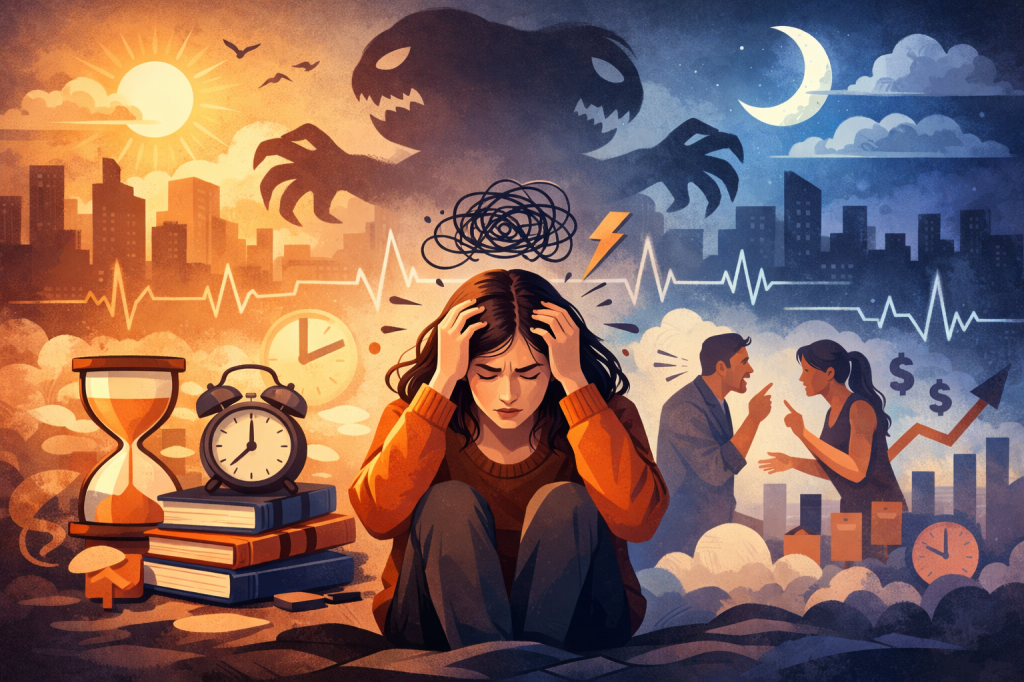
Anxiety is a psychological state characterized by persistent feelings of worry, fear, or unease, often about future events or uncertain outcomes. It can appear without a clear cause and may continue even when no immediate threat is present.
Common psychological symptoms include excessive worrying, restlessness, difficulty concentrating, and irritability. Physical symptoms may involve rapid heartbeat, muscle tension, digestive discomfort, fatigue, and sleep disturbances. When anxiety becomes chronic and interferes with daily functioning, it may develop into an anxiety disorder.
What Is Stress?
Stress is the body’s natural response to pressure or demand. It usually arises from external factors such as work deadlines, financial concerns, relationship issues, or major life changes.
In short periods, stress can enhance focus and motivation. However, chronic stress keeps the body in a constant state of alert, leading to emotional exhaustion, weakened immunity, and increased vulnerability to anxiety and depression.
Anxiety vs Stress: Key Differences
Although closely related, anxiety and stress are not the same:
- Stress is typically linked to a specific external trigger and decreases once the situation is resolved.
- Anxiety often persists even without an identifiable cause and is driven by internal thought patterns.
Long-term stress can contribute to anxiety, while ongoing anxiety can amplify everyday stressors.
High-Functioning Anxiety
Some individuals experience what psychologists refer to as high-functioning anxiety. These people appear productive, successful, and organized, yet internally struggle with constant self-pressure, fear of failure, perfectionism, and difficulty relaxing.
Because it is often hidden behind achievement, high-functioning anxiety frequently goes unnoticed and untreated.
Physical Symptoms of Anxiety People Often Ignore
Anxiety does not only affect the mind. Many people experience physical symptoms such as headaches, stomach pain, chest tightness, dizziness, excessive sweating, or unexplained fatigue. These symptoms are sometimes mistaken for medical conditions, while their psychological origin remains overlooked.
Evidence-Based Ways to Manage Anxiety and Stress
Psychological research highlights several effective strategies:
- Cognitive Behavioral Techniques (CBT): Help identify and reframe negative thought patterns.
- Mindfulness and Meditation: Reduce rumination and increase emotional regulation.
- Regular Physical Activity: Lowers stress hormones and improves mood stability.
- Breathing and Relaxation Exercises: Calm the nervous system and reduce immediate tension.
- Professional Support: Therapy provides tools to address root causes and coping mechanisms.
When Should You Seek Professional Help?
If anxiety or stress persists for weeks, interferes with daily life, affects sleep, relationships, or work performance, or causes physical distress, consulting a qualified mental health professional is strongly recommended.
Best Books on Anxiety and Stress (Globally Recognized)
📘 Feeling Good: The New Mood Therapy — David D. Burns
A classic CBT-based book widely recommended for anxiety and negative thinking.
Source: https://en.wikipedia.org/wiki/Feeling_Good:_The_New_Mood_Therapy
📘 Full Catastrophe Living — Jon Kabat-Zinn
A foundational work on mindfulness-based stress reduction (MBSR).
Source: https://en.wikipedia.org/wiki/Full_Catastrophe_Living
📘 The Worry Trap — Chad LeJeune
Explains anxiety through Acceptance and Commitment Therapy (ACT).
Source: https://en.wikipedia.org/wiki/The_Worry_Trap
📘 The Meaning of Anxiety — Rollo May
A psychological classic exploring anxiety’s role in human development.
Source: https://en.wikipedia.org/wiki/The_Meaning_of_Anxiety
📘 Altered Traits — Daniel Goleman & Richard Davidson
Scientific exploration of how meditation reshapes the brain and reduces stress.
Source: https://en.wikipedia.org/wiki/Altered_Traits
Conclusion
Anxiety and stress are universal human experiences, but they do not have to control one’s life. Understanding their psychological mechanisms, recognizing symptoms early, and applying evidence-based strategies can significantly improve mental wellbeing. Awareness is the first step toward balance and resilience.
Disclaimer
This article is for educational purposes only and does not replace professional medical or psychological advice. If anxiety or stress significantly affects your daily life, please consult a qualified mental health professional.
References
- Encyclopedia Britannica – Anxiety
https://www.britannica.com/science/anxiety - Cleveland Clinic – Anxiety Disorders
https://my.clevelandclinic.org/health/diseases/9536-anxiety-disorders - National Center for Complementary and Integrative Health – Stress
https://www.nccih.nih.gov/health/stress
 wotopics