

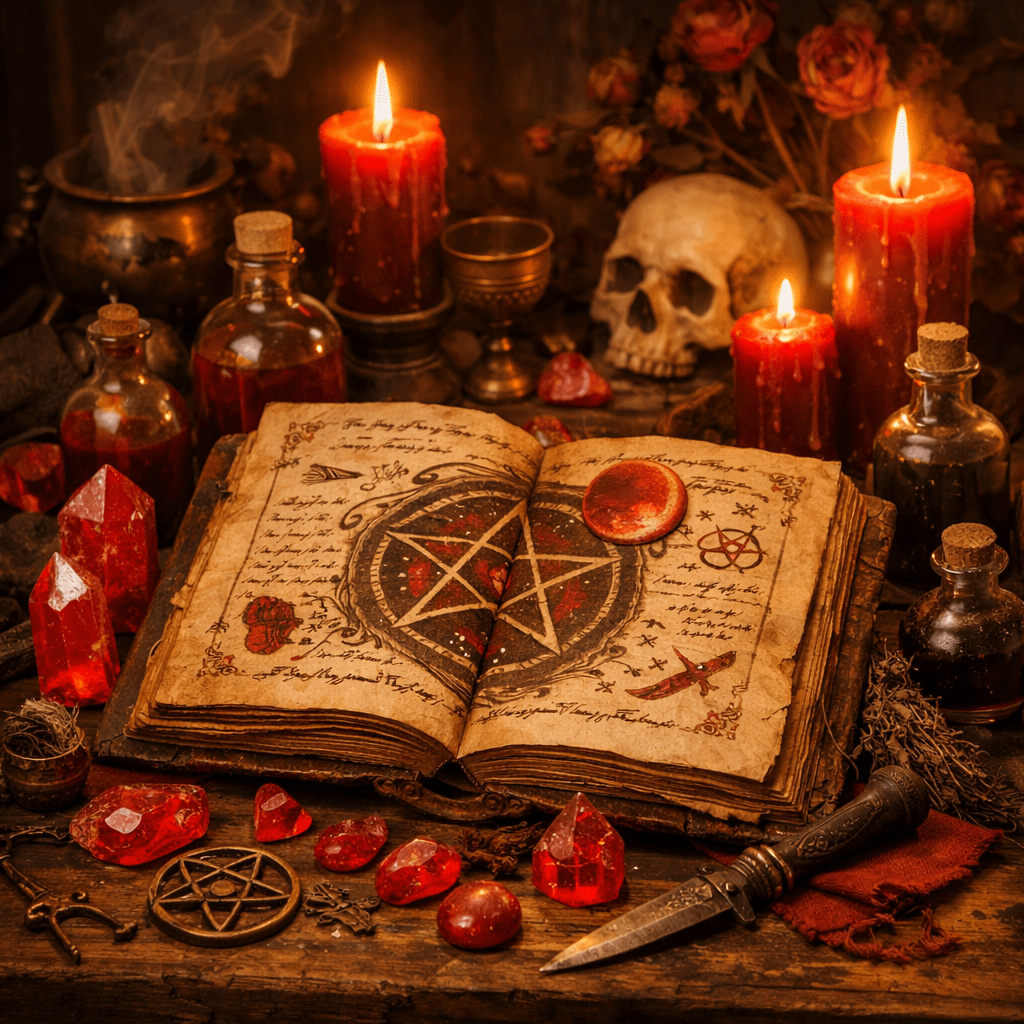
Red magic is one of the most intriguing and controversial concepts in human cultural history. While it is often associated with emotion, desire, and love in folklore, it is fundamentally a cultural and symbolic concept, not a proven historical reality. Across civilizations, red magic has appeared in stories, rituals, and beliefs as a metaphor for intense passion, emotional influence, and supernatural intervention.
This article explores red magic from a cultural, historical, and anthropological perspective, not as a real practice, but as part of human storytelling and belief systems.
What Is “Red Magic”?
The term red magic generally refers to magical beliefs symbolically associated with passion, emotion, love, or blood. The color red has long represented life, vitality, danger, and intense emotion across many cultures. Its symbolic use reflects a dual meaning: creative life force on one hand, and chaos or danger on the other.
Historical Background and Roots
Ancient Near East and Love Magic
In the ancient Near East, references to love-related magic appear in cuneiform tablets dating back more than 4,000 years. Sumerian, Akkadian, and Babylonian sources include spells and rituals intended to influence affection and desire.
Similar evidence exists in Ancient Egypt, where ostraca from the New Kingdom period (c. 12th–11th century BCE) mention spells related to attraction and emotional bonds. These examples demonstrate that emotional or love magic was part of everyday belief systems and religious symbolism.
Magic in Ancient Mediterranean Cultures
Greek and Roman magical traditions commonly included rituals intended to influence love and desire. The Greek Magical Papyri contain numerous charms designed to bind affection or provoke emotional attachment.
Archaeological discoveries from the late antique Levant (5th–6th century CE) reveal love amulets from Jewish magical traditions, often written in Aramaic and aimed at stirring affection. These practices highlight how emotional symbolism crossed religious and cultural boundaries.
Spread Across Cultures
Although “red magic” as a formal category is modern, emotion-based magical symbolism appeared widely:
Europe: Renaissance-era love magic, sometimes integrated into Christian folk practices, yet frequently condemned.
Middle Eastern and Mediterranean regions: Love charms transmitted orally and through manuscripts.
Global folklore: Myths involving potions, charms, and emotional influence appear worldwide.
In all cases, magic served as a symbolic framework for expressing emotional desire and social power, rather than literal supernatural control.
Myths and Symbolism
Binding Love and Passion
Many ancient texts describe rituals meant to bind affection or create emotional dependency. Greek magical literature often portrays love as a force that could overwhelm reason, reinforcing cautionary narratives.
Cultural Symbolism of Red
Across cultures, red symbolizes both life and danger. In Egyptian cosmology, red represented chaos and the desert, yet also carried protective meanings depending on context. Such symbolism reflects humanity’s complex relationship with passion and power.
Academic Perspectives on Magic as a Cultural Phenomenon
Modern scholars view magic as a cultural construct rather than a literal force. Anthropology and history recognize magical beliefs as tools societies used to interpret uncertainty, emotions, and social relationships before scientific frameworks emerged.
Cultural and Ethical Warning
There is no scientific evidence that red magic or any form of emotional magic can truly influence another person’s will. Across cultures and religions, such practices are critically viewed, emphasizing that emotional manipulation contradicts ethical and healthy human relationships based on free choice and mutual respect.
Conclusion
Red magic represents not a real system of supernatural power, but a symbolic language through which human cultures explored love, desire, and emotional vulnerability. Studying these beliefs today offers insight into how societies have historically used myth and symbolism to understand human emotion.
📚 Sources and References
Wikipedia – Love Magic
https://en.wikipedia.org/wiki/Love_magic
British Library – Love Spells in the Greek Magical Papyri
https://www.bl.uk/stories/love-spells-in-the-greek-magical-papyri
Wikipedia – Ancient Jewish Magic
https://en.wikipedia.org/wiki/Ancient_Jewish_magic
Michel Pastoureau, Red: A History of the Color (Everand)
https://www.everand.com/book/822447413
Wiley Online Library – Anthropology of Magic
https://onlinelibrary.wiley.com/doi/10.1111/1468-229X.13106
 wotopics
Leave a comment